Languages
Saç Ekimi İşlemlerinde Saç Açısı Neden Önemlidir?
Hair angle plays an important role in the success of hair transplant procedures. It has a decisive influence on how natural and aesthetic the results will be. Understanding the importance of hair angle leads to more satisfactory results in hair restoration treatments for patients and surgeons.
This article examines the importance of hair angle in hair transplant surgery. It addresses how the direction of hair growth affects the aesthetics on the head. It will also discuss optimal follicle placement techniques and the challenges of managing hair growth angles. By the end of the article, readers will understand the importance of hair angle in creating natural-looking results.
Understanding Hair Angle
Definition of Hair Angle
Hair angle refers to the direction a hair strand takes as it exits the head. This angle is very important in hair transplant procedures because it determines how natural and aesthetic the result will look. The angle of hair growth varies in different areas of the head; for example, the hairline usually has angles between 10° and 20°.
Natural Variations in Hair Growth Patterns
Hair growth patterns differ significantly between individuals depending on factors such as genetics, ethnicity and head structure. For example, follicles in the donor area on the right usually grow towards the left side of the person and this orientation continues along the midline. On the left side of the midline, the direction changes and shifts to a more neutral position. The slope of the hair follicles also changes in the lateral plane of the head. As you move upward from the donor area to the recipient area, the downward follicle orientation gradually changes upward. These natural hair growth patterns are important factors for surgeons to consider when performing hair transplantation.
Importance in Achieving Natural Looking Results
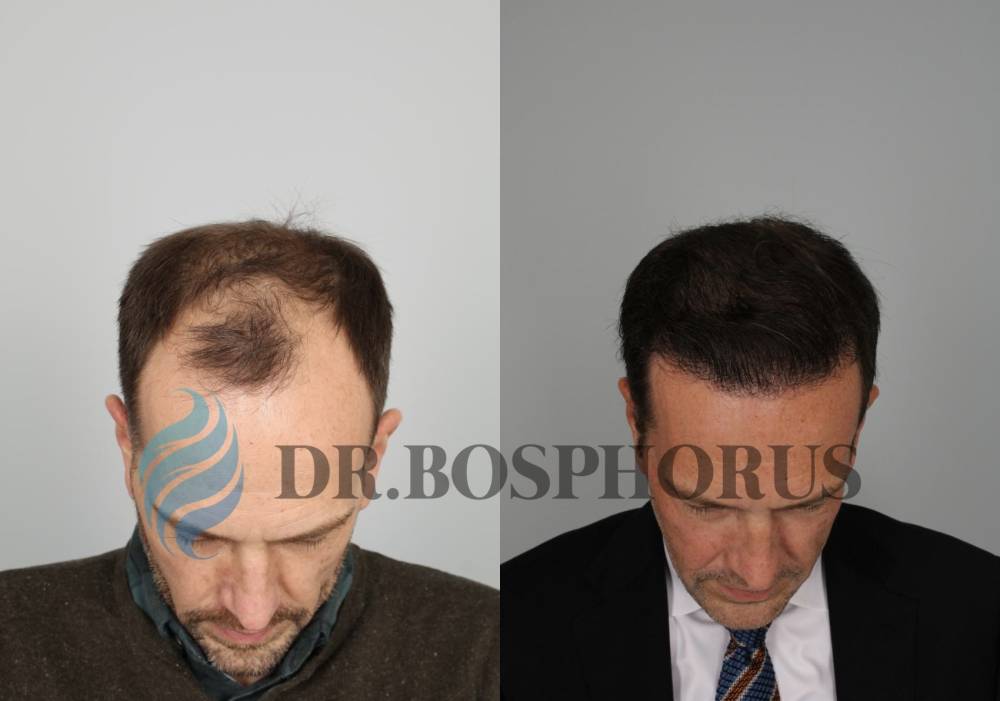
Understanding and mimicking natural hair angles is crucial to create a realistic look in hair transplants. While the angle, direction, curl and flow of a transplanted follicle may match the surrounding hair exactly, the transplanted hair may show a different growth direction, creating an awkward appearance. This highlights the difficulty of achieving natural-looking results. To create a more natural look, surgeons may place the transplanted hair at slightly different angles and directions from the existing hair. This approach compensates for the different effects of gravity on hair strands of different thicknesses. By carefully considering these factors, experienced surgeons can create recipient areas with the correct orientation and depth, ultimately achieving more satisfying results for patients undergoing hair restoration treatment
Visual Effects of Transplanting at the Right and Wrong Angle
The angle at which the hair follicles are transplanted significantly affects the overall appearance of the hair restoration procedure. Transplanting at the right angle provides a natural look, while transplanting at the wrong angle
can create an artificial appearance. When hair is transplanted at an angle greater than 45 degrees, it can cause the hair to stand upright or be difficult to comb. This can cause an awkward appearance, especially when the transplanted hair grows in the opposite direction, and the hair can take angles between 110 and 120 degrees, or even up to 230 degrees.
can create an artificial appearance. When hair is transplanted at an angle greater than 45 degrees, it can cause the hair to stand upright or be difficult to comb. This can cause an awkward appearance, especially when the transplanted hair grows in the opposite direction, and the hair can take angles between 110 and 120 degrees, or even up to 230 degrees.
Effect on the Perception of Hair Density
Hair angle plays an important role in the perception of hair density. Sharper exit angles create an effect called “shingling”, which increases the appearance of scalp coverage and aesthetic fullness. For most patients, this sharp angle mimics the natural orientation of the hair in the donor area, creating the illusion of higher density by blocking light. On the other hand, wider exit angles (especially more common in Asian patients) can increase the risk of thinning in the donor area in the FUE (Follicular Unit Extraction) process.
The Role of Creating a Natural Hairline
To create a natural-looking hairline, hair restoration specialists need to carefully examine the angle and direction of the transplanted follicles. At the front hairline, the hair should be placed at a very low angle, usually between 10 and 20 degrees, and all hair should be directed forward, with no radial spread. As you move towards the sides of the hairline, the direction of the hair slowly flattens forward and the angle becomes almost straight (5-10 degrees) at the temporal hairline. Attention to these details is crucial to create a realistic and aesthetically pleasing result.
Optimal Hair Angle Placement Techniques
Advanced Wound Opening Methods
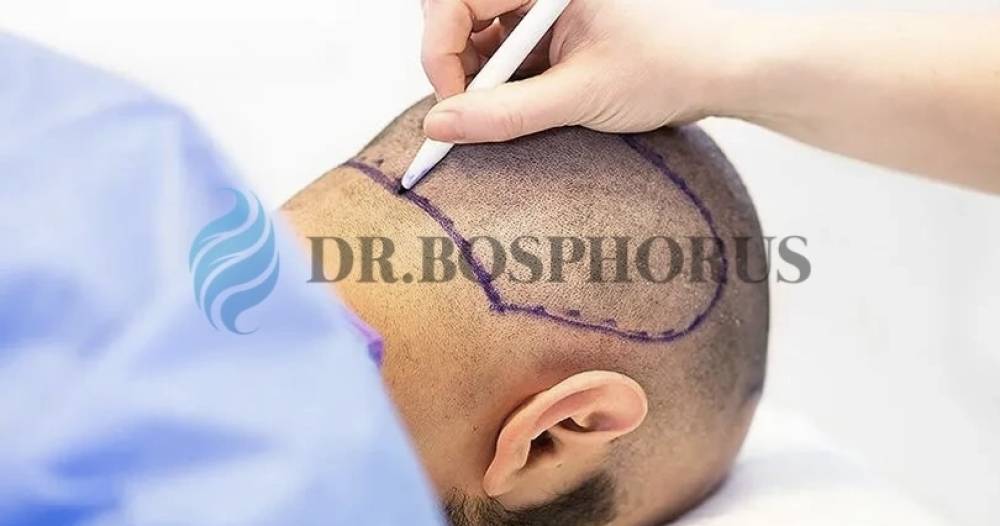
Hair transplant surgeons use various techniques to ensure optimal hair angle placement. One of these methods is wounding at specific angles to mimic natural hair growth patterns. Surgeons usually wound at an angle of 30 to 40 degrees in the middle hair area and 10 to 20 degrees at the front hairline. This degree and directional control prevents sudden changes from occurring and prevents damage to the follicles during transplantation.
Customization According to Individual Hair Characteristics
Customization is crucial to achieve natural-looking results. Surgeons customize the treatment plan by evaluating factors such as hair density, scalp condition and desired results. They also design the hairline taking into account the patient's facial structure and natural hair growth patterns. This personalized approach improves the accuracy of the transplantation and leads to superior aesthetic results.
The Role of Technology in Angle Determination
Advanced technology has revolutionized hair transplant procedures and improved accuracy and efficiency. Robotic devices support surgeons in the follicular unit harvesting process, enabling more precise graft harvesting and reducing follicular unit loss rates. Some clinics are able to precisely control the depth, direction and angle of follicle implantation using specialized tools such as the DHI (Direct Hair Implantation) device. These technological advances allow surgeons to achieve more consistent and natural-looking results and minimize the risks of complications.
Challenges and Considerations in Hair Angle Management
Dealing with Different Hair Structures and Thicknesses
Hair angle management becomes more complex when dealing with different hair structures and thicknesses. Hair characteristics vary considerably between ethnic groups, which can create particular challenges. For example, Afro-textured hair has oblique follicles underneath, and extreme care is required to remove these follicles without damaging them. Asian hair can benefit from FUE techniques, while African-Caribbean hair requires specialized tools to protect fragile follicles.
Adapting to Different Head Spaces
The direction and angle of hair growth varies in different head areas and this is something that needs to be carefully adapted during transplantation. In the middle hairline, the hair usually grows forward, while in some cases the hair may grow backwards due to loops or undulations. The frontal head region is usually oriented towards the face, while the angles of emergence can vary from right to left. As you move from the hairline towards the mid-frontal head region, the angle becomes less sharp and almost steepens as you approach the frontal crown region.
Taking Future Hair Loss Patterns into Account
Predicting future hair loss patterns is crucial for long-term transplantation success. Surgeons should consider miniaturization rates in both donor and recipient sites. High levels of miniaturization in donor sites may indicate that the donor margin may narrow in the future. For class III patients, it is difficult to predict whether this pattern will remain stable or progress to a larger area of baldness. However, a miniaturization rate exceeding 20% in the crown region may indicate a risk of developing a class IV or V pattern
Conclusion
Hair angle plays a critical role in the success of hair transplant procedures. Its impact on the aesthetic success of the results is undeniable. Understanding and mimicking natural hair growth patterns allows surgeons to achieve more natural-looking and satisfying results. The use of the latest technology has also revolutionized this field, providing more precise control over follicle placement.
In conclusion, managing the hair angle is a complex procedure and requires a careful, experienced approach. By considering individual hair characteristics, adapting to different head regions and planning for future shedding patterns, surgeons can achieve natural-looking and long-lasting results. By skillfully managing these elements, hair restoration specialists provide their patients with not only natural-looking results, but also long-term satisfaction.
In conclusion, managing the hair angle is a complex procedure and requires a careful, experienced approach. By considering individual hair characteristics, adapting to different head regions and planning for future shedding patterns, surgeons can achieve natural-looking and long-lasting results. By skillfully managing these elements, hair restoration specialists provide their patients with not only natural-looking results, but also long-term satisfaction.
Frequently Asked Questions
What is the typical angle for hair transplant grafts?
The order of placement of hair grafts usually proceeds from the back to the front of the head and the right
For surgeons, it is done from left to right. Generally, the angle of hair exit from the head is between 30 and 40 degrees in the mid-head region and between 10 and 20 degrees in the frontal hairline.
For surgeons, it is done from left to right. Generally, the angle of hair exit from the head is between 30 and 40 degrees in the mid-head region and between 10 and 20 degrees in the frontal hairline.
How long does it take to see the final direction of hair after hair transplantation?
The actual direction and angle of the transplanted hair is not visible immediately after surgery. The final results usually appear between 6 and 12 months, after which time any problems with hair direction can be evaluated.
Why is it necessary to sleep at a 45 degree angle after hair transplantation?
After hair transplantation, especially if the FUE (Follicular Unit Extraction) method is used, it is very important not to damage the newly placed grafts. Sleeping with the head and back elevated at a 45-degree angle ensures proper healing and prevents the grafts from moving during the first four nights.
Does hair naturally grow at an angle?
Hair follicles do not always grow upright and can be tilted in different directions. For example, scalp hair usually grows vertically, while eyebrow hair grows in a more horizontal direction.